
Given all the recent disruptions to the oil supply chain, gas prices and availability in India have become increasingly volatile. For commercial pizza operators, this raises a real question: Should I switch from gas-powered ovens to electric ones?
The choice between electric and wood-fired pizza ovens isn’t straightforward. The choice affects 3 things: the oven’s cooking temperature and performance dictate what kind of pizza you can make and how many you can deliver; then there’s maintenance and operating costs; and finally, there’s the experience you’re delivering to your customers.
The short answer is that electric ovens are better for consistency, training, and tight spaces. Wood-fired ovens are better for authentic Neapolitan pizza, the theatre and visual impact of cooking with live fire, and premium positioning.
As wood-fired and gas pizza oven makers ourselves, you’d think we’d be biased here, but the fact is that neither option is universally “better” — it depends on the kind of pizza you want to serve, your business model, and your power and fuel situation. We’re not just saying this: Marco himself owns and uses an electric oven at home.
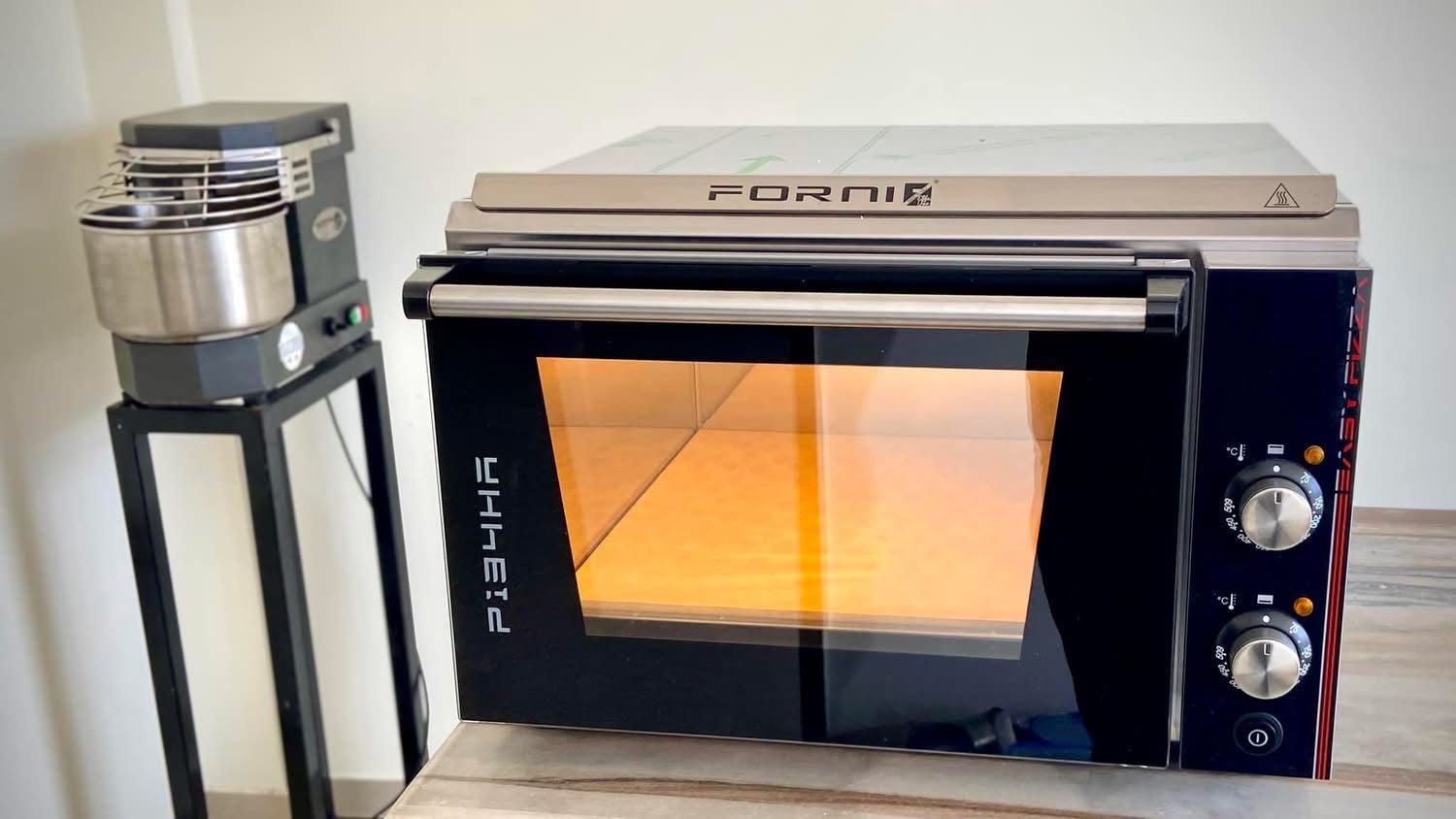
This post is a practical comparison of electric vs wood-fired pizza oven performance to help you make the right choice for your operation. We’ll also explain why Marco chose the Forni as his personal electric oven, the quality of pizza it can make and what the tradeoffs are.
Electric is built for repeatable results; wood-fired ovens are for live-fire authenticity. Don’t judge an oven by fuel type alone.
Electric ovens are all about convenience, consistency, and precise temperature control. They’re designed for people who need repeatable results with minimal variables and straightforward staff training.
Wood-fired ovens prioritise traditional cooking methods, live-fire atmosphere, and authentic Neapolitan-style positioning. They create a cooking environment that’s impossible to replicate with electric heating elements.
Both oven types can produce high-quality pizza when matched to the right dough style, temperature, and service model. The key is understanding that customer perception, maintenance needs, and operating costs vary significantly between the two approaches.
The key is to understand that oven design, peak temperature, insulation quality, operator skill, and workflow integration often matter more than whether you’re burning wood and gas or using electricity.
Temperature capabilities directly affect crust texture, cooking time, and the pizza styles you can execute successfully.
Good electric ovens are hard to find, especially in India. A high-end electric pizza oven can reach the temperature range needed for Neapolitan-style baking, with high-end countertop models typically reaching 450–500°C.
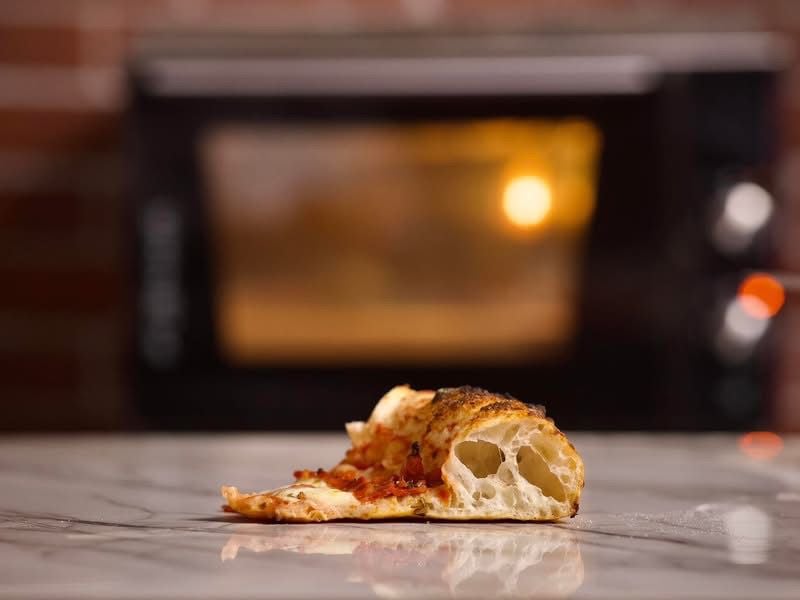
This is a Neapolitan pizza that Marco made in his electric oven at home. The idea that you can’t reach service temperature in an electric oven is a misconception. You just need a high-end electric oven, which is hard to find. A standard domestic electric oven will never come close to service temperature.
Effeuno models reach up to 500°C with a 40-minute preheat time, and commercial electric ovens from manufacturers like PizzaMaster also hit 500°C maximum temperatures. By comparison, standard domestic gas ovens usually top out around 260–290°C.
Digital controls allow more precise top and bottom heat management than traditional wood-fired cooking. Adjustable settings, programmable options, and other control features help operators set the right heat for different pizza styles, which ensures more consistent results throughout service without active fire management. Reaching 400–450°C is important for a crispy crust, and electric ovens typically use conduction and radiant heat to support even baking.
Electric ovens excel in repeatable results, staff training scenarios, bakeries, slice shops, and controlled production environments. They remove the variables that come with live fire, making them ideal for operations that prioritize consistency over authenticity. At high heat, some models can bake pizzas in 90–120 seconds and produce the leopard spotting associated with Neapolitan-style pizza.
However, electric ovens cannot fully replicate the live flame, dome heat pattern, and wood-fired cooking environment that creates authentic Neapolitan characteristics.
Traditional Neapolitan pizza standards specify a wood-fired oven at 430-480°C with a 60-90 second bake. This isn’t just about temperature—it’s about how that heat is delivered.
Wood-fired ovens create intense radiant heat from the dome, conductive heat from the floor, and direct flame exposure. This combination supports fast oven spring, blistering, leopard spotting, and the texture that defines authentic Neapolitan pizza.
Wood-fired ovens require active fire management, proper turning technique, and careful control of floor temperature. The operator becomes part of the cooking process, not just someone monitoring digital displays.
The smoky flavour often mentioned with wood-fired cooking should be understood correctly. In a 60-90 second bake, the biggest impact comes from intense heat, flame contact, char development, and subtle live-fire aroma rather than heavy smoke penetration.
Long-term costs depend on local electricity prices, wood costs, labor requirements, oven size, duty cycle, and maintenance demands.
Electric ovens require a suitable power supply and can have a significant energy demand. Smaller electric ovens often use about 1500W-3000W, while higher-wattage models heat faster and hold temperature better. A smaller Effeuno model uses around 3200W, while large commercial PizzaMaster decks can demand 21.4 kW per deck. Commercial electric pizza ovens typically use 4.6-6 kW for a 4-pizza capacity, with larger modular systems requiring much more.
Electric Oven prices generally start around Rs 5,000 and can reach Rs 50,000 depending on the model and features, so entry-level units can offer an affordable price for basic needs. Models built for commercial use often fall between Rs 10,000 and Rs 32,800, depending on size and capacity. A compact 4-pizza model averages around Rs 15,500, while larger deck ovens with more trays can increase output to as many as 8 pizzas at a time.
Electric ovens eliminate wood purchasing, wood storage space requirements, ash disposal, and chimney cleaning. Your ongoing costs are mainly electricity and occasional maintenance.
In areas with unstable electricity—common in many parts of India—backup power, voltage protection, or generator planning becomes necessary. Power cuts during service can shut down your entire pizza operation.
Wood-fired ovens require ongoing wood purchasing, proper storage space, ash handling, and chimney maintenance. Daily fuel costs depend on local hardwood prices, moisture content, oven size, service hours, and operator efficiency.
Wood quality directly affects heat output, smoke production, flavour development, and burning efficiency. Poor wood creates operational problems and inconsistent results.
Wood-fired ovens reduce dependence on high electrical loads, but they increase labour and cleaning requirements. Local fire codes, ventilation requirements, and emissions regulations can add installation and compliance costs.
Maintenance needs differ significantly because electric ovens rely on electrical components while wood-fired ovens depend on refractory materials, airflow systems, and chimney maintenance.
Electric ovens rely on heating elements, thermostats, wiring, sensors, and control systems. Insulated cabinet construction, often using stainless steel, also affects heat retention and exterior safety, while each internal component represents a potential failure point that requires technical expertise to diagnose and repair.
Heating elements need regular cleaning, temperature accuracy requires periodic verification, and ventilation systems need maintenance to prevent heat buildup. Common issues include uneven cooking, slow heating, inconsistent temperature control, complete heating failure, and element malfunction.
Repairs typically require qualified technicians, especially for wiring, heating elements, sensors, or control boards. In India, finding qualified repair technicians for specialised pizza oven electronics can be challenging and expensive. They are also generally easier to clean than gas models because there are no burners or grates trapping grease, so routine wipe-downs with a damp cloth are simpler.
Electric ovens offer easier standardisation across multiple locations but remain vulnerable to electrical faults, voltage problems, and component failure that can shut down operations instantly. A durable door and cool-touch handle also support safer daily use, and because electric models do not use open flames, fire risk is lower than with gas equipment.
Wood-fired ovens have fewer electrical components but require regular ash removal, floor cleaning, chimney care, and refractory maintenance. The maintenance is more predictable and often manageable with trained staff.
Proper wood-fired oven maintenance involves cleaning after each use once completely cool and annual chimney cleaning. Ash buildup, soot accumulation, poor airflow, wet wood, and chimney blockage reduce performance and create safety issues.
Dome and floor maintenance typically involves refractory or masonry care rather than electronic repair. These repairs often cost less and can be performed by skilled masons rather than specialised technicians.
Well-built wood-fired ovens last for decades with proper installation, curing, firing technique, and regular maintenance. The longevity often exceeds that of electric ovens, especially in demanding commercial environments.
Your oven choice isn’t just about cooking—it shapes customer perception and can become a central part of your restaurant’s identity.
The electric pizza oven is well-suited to indoor installations in clean, modern, compact, or back-of-house kitchen layouts, and it can deliver restaurant-quality pizza with better temperature control, convenience, and safety than traditional gas setups. They support consistent output without requiring customers to see the cooking process, making them ideal for delivery-focused operations.
Many electric models can be used safely indoors without combustible fuel storage or large hood or chimney requirements, where local rules allow.
They’re practical for delivery kitchens, bakeries, cafés, food courts, trial menus, and smaller-scale commercial or home test-kitchen setups where consistency matters more than theatre.
The experience is less theatrical than a visible wood-fired oven, but often more predictable for staff training and service flow. Electric ovens work well when your brand focuses on convenience, speed, or modern efficiency.
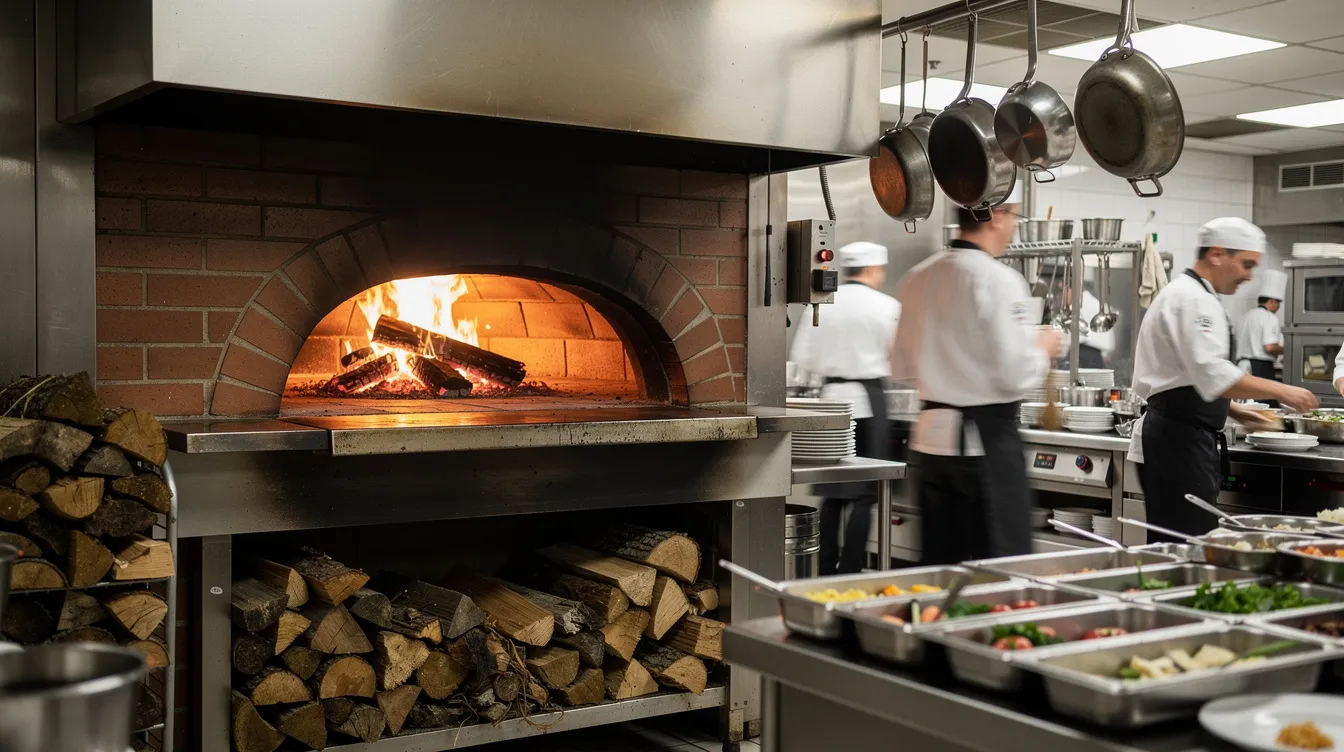
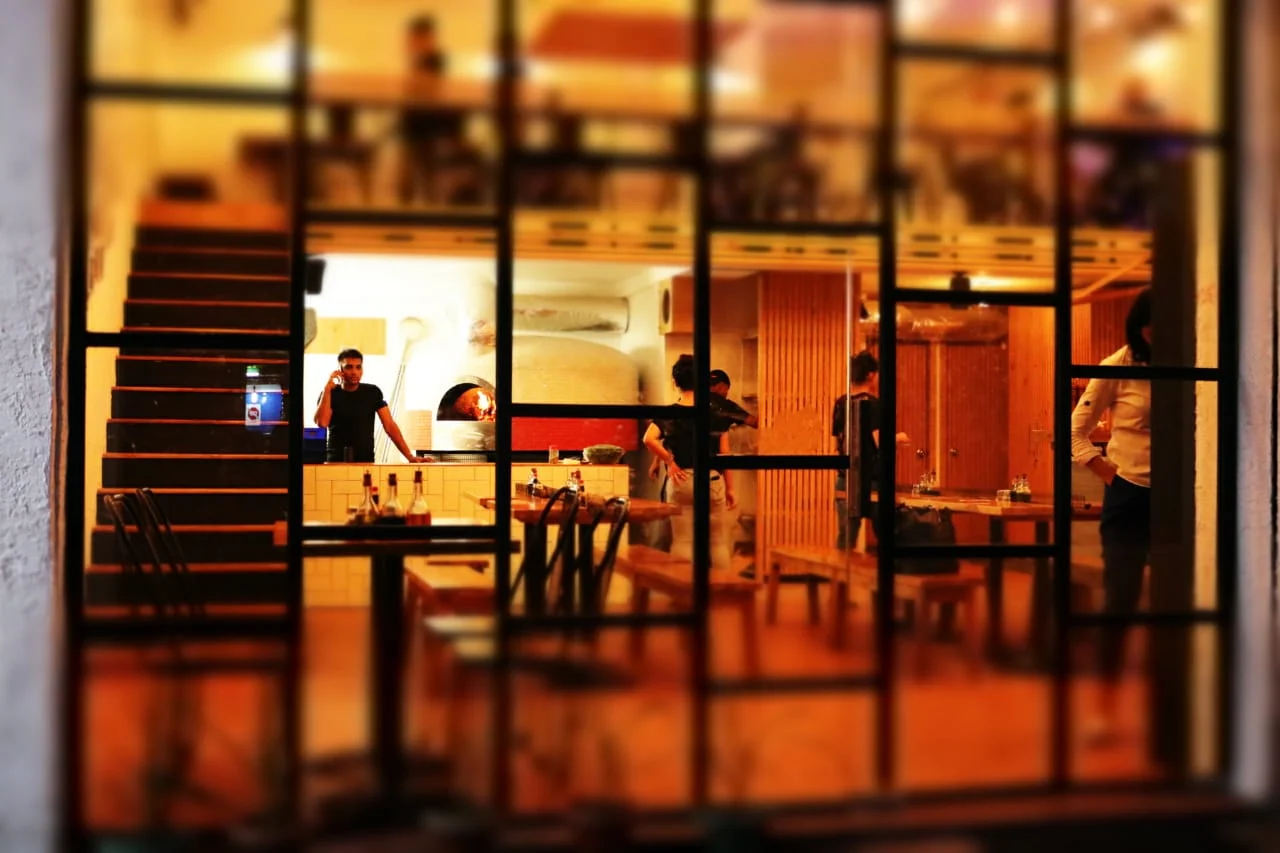
A visible wood-fired oven acts as a visual centrepiece and creates warmth, authenticity, and theatre in your restaurant. The dome becomes part of your décor and brand story.
Open wood-fired ovens let diners watch food preparation, adding entertainment and sensory engagement to the dining experience. The live flame, oven placement, sounds, aromas, and chef interaction strengthen your restaurant’s brand identity.
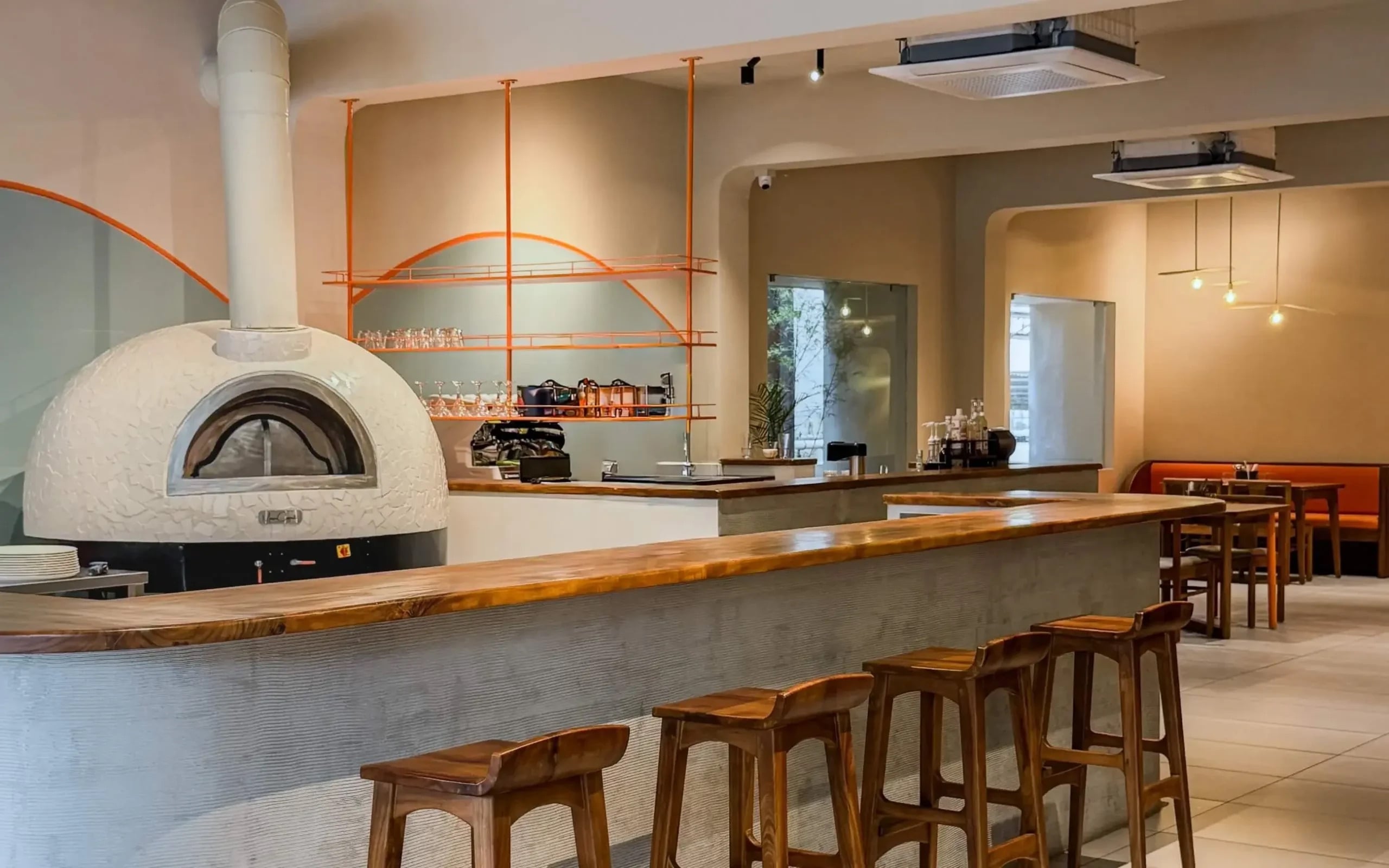
Wood-fired ovens help justify premium positioning when your product, service, and restaurant concept support the authenticity story. Customers often perceive wood-fired pizza as more valuable and are willing to pay higher prices.
The visual impact extends beyond the dining room—wood-fired ovens photograph well for social media and create memorable experiences that customers share with others.
Your oven choice should align with your restaurant concept, target pizza style, volume requirements, location constraints, and staff capabilities.
Electric ovens suit bakeries, pizza trials, delivery kitchens, slice shops, cafés, and operations requiring repeatable temperature control. They work well for businesses testing pizza concepts before full commitment or operations where pizza isn’t the primary focus.
Wood-fired ovens suit full-service pizzerias, open-kitchen concepts, artisan brands, and restaurants focused on traditional Neapolitan-style pizza. They’re essential when authenticity and theatre are central to your brand positioning.
Electric ovens are easier for staff training because settings can be standardised and documented. New employees can achieve consistent results faster with less specialised knowledge.
Wood-fired ovens require stronger operator skills, including fire management, floor temperature control, pizza turning technique, and wood selection. This creates higher training requirements but also allows skilled operators to achieve results impossible with electric ovens.
Local infrastructure matters significantly. Check electricity capacity, ventilation requirements, fire regulations, chimney installation possibilities, and fuel availability before making your decision.
Choose electric ovens if you need precision, consistency, compact installation, lower operational complexity, and easier staff training. They work well for delivery-focused operations, trial concepts, or locations with space and infrastructure constraints.
Choose wood-fired ovens if your brand depends on authenticity, open-flame theatre, traditional Neapolitan positioning, and memorable dine-in experiences. They’re essential when the oven becomes part of your customer experience and brand story.
Choose electric if your location has reliable power, limited space for wood storage and chimney systems, or strict fire regulations that complicate wood-fired installation.
Choose wood-fired if you have access to quality fuel, proper ventilation capabilities, staff willing to develop fire management skills, and a concept where the oven enhances the customer experience.
Both oven types can succeed when properly matched with your business model, target pizza style, and operating environment. The key is honest assessment of your priorities, constraints, and long-term vision.
Before deciding, calculate local electricity costs versus wood costs, projected service volume, maintenance requirements, installation expenses, and staff training investments. Your choice should support your business goals, not complicate them.